

Can Quantum Science Change the Water Problem?

Last time, we considered the shift from a “water-transporting civilization” to a “water- recycling civilization.” However, a new civilization cannot be realized through new ideals alone. To implement those ideals in the real world, advances in the science and technology that underpin them are essential.
In recent years, “quantum science” has been significantly expanding the possibilities in this area.
When people hear the term “quantum science,” many probably think of “quantum computers.” In reality, however, it encompasses a broad range of scientific and technological fields, including not only quantum computers but also quantum simulation, quantum sensors, and even quantum metrology.
And now, as quantum science converges with AI and research into new materials, it is poised to open up new possibilities for solving water-related issues.
■The Water Issue Is Not Just a Matter of “Resources” But Also a Matter of “Technology”
About 97% of the water on Earth is seawater. If we could convert this abundant seawater into safe and affordable freshwater, it could bring about significant change in regions struggling with water shortages.
However, current seawater desalination technologies still face challenges that need to be addressed, such as high energy consumption, the durability of separation membranes, and operating costs.
Furthermore, there is room to further improve the purification performance and maintenance efficiency of water treatment and reuse technologies.
In short, realizing a water-cycling civilization requires not only a transformation of social systems but also the evolution of the technologies that underpin them.
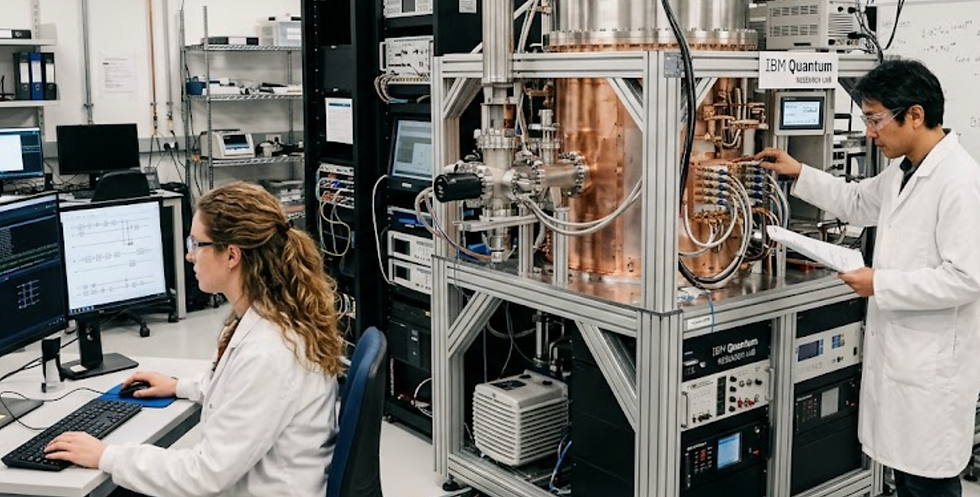
■Quantum Science Creates New Materials
Quantum science is the study of understanding and harnessing the behavior of the extremely small world of atoms and electrons. Within this field, quantum simulation is expected to enable high-precision analysis of the interactions between water molecules, ions, and materials, thereby opening up the possibility of discovering new materials that were previously difficult to identify.
For example: “What kind of material can efficiently allow only water to pass through while removing only salt and harmful substances?”
“What kind of surface structure resists fouling and maintains performance over the long term?”
Quantum science is seeking to derive new answers to these questions at the atomic level, and these findings have the potential to lead to the development of next-generation seawater desalination membranes, water purification membranes, and adsorbents.
■AI Accelerates Materials Development
AI is further accelerating this kind of materials research. AI analyzes vast amounts of research papers and experimental data and is now capable of proposing combinations and structures of materials that would be difficult for humans to discover.
Currently, this research approach is beginning to be utilized worldwide under the term “Materials Informatics.” AI proposes candidate materials, quantum science analyzes their properties, and researchers verify them through experiments.
This cycle is expected to accelerate the development of new materials at a faster pace than ever before.
■Quantum Sensors Make “Invisible Water” Visible
The potential of quantum science extends beyond materials development. Because quantum sensors can detect extremely small changes with high precision, they are expected to play a key role in next-generation water management technologies.
For example, by monitoring subtle changes in water quality in real time and detecting leaks in pipes or changes in groundwater with high sensitivity, it may be possible to manage water resources more efficiently.
In a society that recycles water, it is important not only to know “how much water is available,” but also to accurately understand “what condition the water is in right now.” Quantum sensors may serve as a new “set of eyes” for this purpose.
■SEATOPIA Is a Demonstration Site for Developing Future Technologies
No matter how advanced a technology may be, it cannot change society if it remains confined to the laboratory. Only by using it in real-world environments, analyzing the results, and making repeated improvements can a technology truly take root in society.
The marine environment is extremely harsh, with numerous factors such as salinity, humidity, waves, temperature fluctuations, and biofouling all coming into play. Precisely for this reason, technologies that can perform effectively in this environment are likely to offer high reliability on land as well.
SEATOPIA is not merely a ship that displays finished technologies.
It is an “evolving demonstration platform” that actually operates new materials designed using quantum science, new membranes proposed by AI, water treatment systems, and measurement technologies using quantum sensors—all while accumulating data and driving continuous improvement.
It is not simply a matter of installing the developed technologies and calling it a day;
by repeating the cycle of “Design → Demonstration → Data Collection → AI Analysis → Improvement → Re- demonstration,”
we will nurture the very technologies that underpin a water-cycle-based civilization.
SEATOPIA is an “offshore R&D hub” for delivering future technologies to society, and a demonstration field for advancing marine civilization.
■As Science Evolves, so Does Civilization
Throughout history, humanity has developed its civilization through science and technology. In the coming era, diverse fields—such as quantum science, AI, new materials, and renewable energy—will converge to support a new water-cycle-based civilization.
What matters is not a single innovative technology. What matters is that different scientific and technological fields interconnect, are continuously tested, refined, and implemented within society. As a platform supporting this cycle, SEATOPIA will serve as a bridge connecting future technologies with society.
Quantum science is not merely a next-generation technology; it holds the potential to become a new scientific foundation for realizing an ocean-based civilization where humans and nature coexist in harmony.


Comments